Discovering Your Own Community
Getting to know your community starts with a simple question: what do I actually know about the place where I live? Many people know the way to work and to the store. Who used to run the workshop on Main Street, or where the name of the square comes from, they do not know. The good news is that most sources are easy to reach. This article shows step by step how to use them.
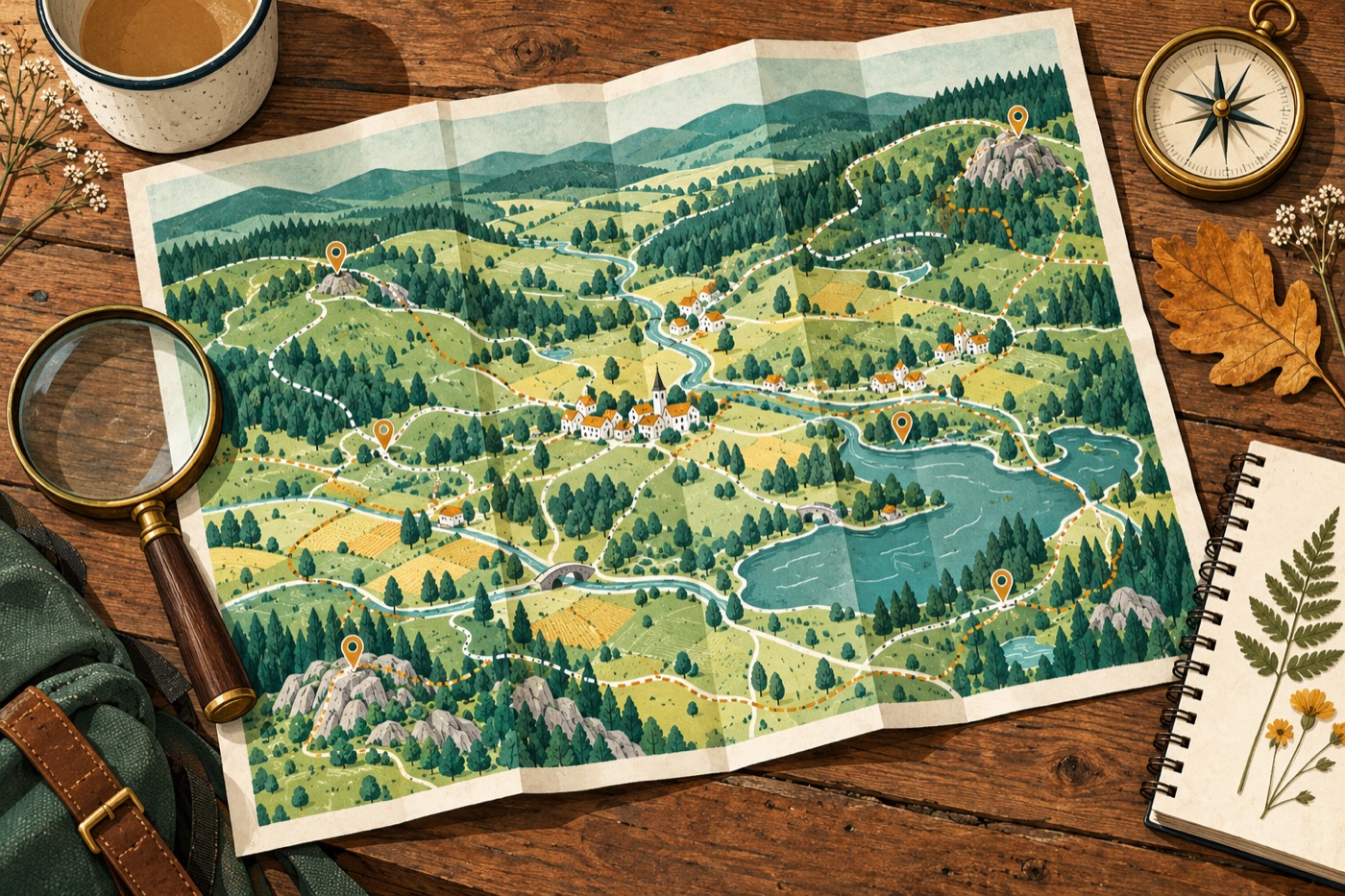
Where do you find knowledge about the community?
A first stop is the municipal archive, which keeps records on past and present local matters. Another source is the local chronicle, an ongoing record of events that is often kept by people from the village or the neighborhood. It is also worth looking at the collections of local heritage and history societies, and at the library, where you will often find memories, photos and small publications.
Each of these institutions has its own rules. Before you visit the archive, the library or the society, find out whether you need to book ahead and whether you may take notes or photos. A short chat with the staff often helps you find a way in, since they know the holdings best. The local chronicle and the municipal archive complement each other: the chronicle records events, while the archive collects documents.
How does a map help?
A map gives you an overview of the whole community. On platforms such as OpenStreetMap you can add workshops, stores, squares and paths, and anyone can help improve the data. In this way your own observations flow into a shared collection that others can use too.
A good exercise is to compare the map with what you see outdoors. A business that is missing or a path that is not yet recorded can be added on purpose. That way, getting to know the community does not stop at reading: you become active yourself.
What does a walk with a notebook show?
On a walk through town with a notebook, you notice what daily routine tends to hide. Signs, old lettering on facades and traces of former businesses often say more about history than some publications do. Write down what catches your eye and where. Later, compare your notes with the local chronicle or with records from the municipal archive.
A photo of the facade and a short note about the place are enough to find information in the holdings later. Notes and documents like these give you a solid basis for further research.
Why is it worth talking with residents?
The most valuable memories are not always in books. Older people know about former businesses, customs and people who appear in no document. Before the conversation, ask those involved whether you may take notes, and record what is said only with their consent.
Local markets and events are a good chance to meet craftspeople and producers from the area. There you can ask about the tradition of their trade or how long a family has run its business. You can also ask about places worth seeing. Talking with a craftsperson is just as revealing as talking with an older resident, and both fill in what is missing from the records.
Where do you start?
It is enough to combine four things: a visit to the municipal archive or the library, a look at the map, a walk with a notebook and a conversation with a resident. These approaches complement each other and together give a fuller picture. You can get to know your community over many short outings, and the best time to plan the first one is this coming weekend.